

The War Without A Why
The one thing this Administration does brilliantly is announce that the job is done.

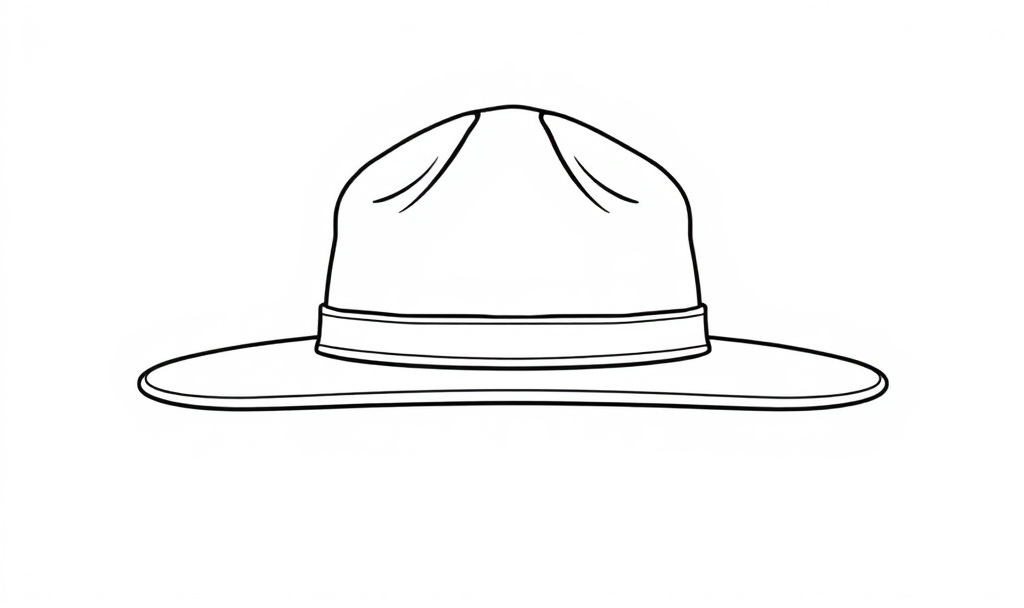
One of my favorite “only-in-DC” guaranteed crowd-pleasers is a bit from high-demand happy-hour impresario Kevin Hawickhorst, a certified G when it comes to all things bureaucratic history1. The bit begins by walking a living room full of people through the history of federal departments — each division, when it started, why, what its deal was, how it worked, why every single domain-relevant person in the country wanted to work there.
The objective correlative2 that anchors the story is the iconic, distinctive, athwart-history-anachronistic park ranger hat timelessly rocked by luminaries from Smokey Bear to Ranger Rick. Yes, you can trace the origins back to the vaqueros. Yes, the Buffalo Soldiers connection is legit. Yes, the direct precursor debuted in the cavalry corps. Funny you should ask!

But so, the whole reason we’re talking about this is — picture Kevin, or a guy you can imagine being named Kevin, surgically taking a pull from his beer stein as he delivers the kicker — it used to be that way more branches of the federal government wore uniforms. The Park Service, it seems, was one of the very last debuts.
Uniforms (the story goes) stood for culture. For pride. For a certain sense of identity and mission. Uniforms meant that a dimension of someone’s personhood was visibly and inextricably linked with their membership in an institution, and thereby evaluated in the context of that institution. That meant a certain sense of expectation. That also meant a certain sense of duty. And it meant that in a straightforward, mechanical way, the wearer was singled out from the general population in a manner that deliberately called attention to itself. Mere normalcy, in other words, was not on the menu.
And we haven’t launched a uniformed, non-military, non-law-enforcement division of the federal government in over a hundred years3.
The point of the story — the beer is finished and set down; a clasped-finger gesture crystalizes the point — is not that uniforms are a magical performance-enhancing catch-all. It’s that they’re objective correlatives4 for a broader sense of excellence and camaraderie and devotion that eroded substantially as the bureaucracy expanded, as it shifted away from subject-specific competency and towards functional ‘expertise’. And so those of us in the state capacity conversation, those of us who are thinking about things like procurement timelines and waterfall builds and registers of eligibles, would do well not to limit ourselves to the mechanical and environmental and procedural adjustments necessary for a department to really kill it at its job.
Instead, we should expand our aperture to what it takes to create and cement and reinforce a culture that gets people out of bed in the morning stoked to be a part of a game-changing mission for the rest of their lives.
Cue light applause as beers get refilled and appetizers get passed around. A line starts to form in front of Kevin with questions about details. Gradually the air saturates with the sound of Moleskine notebook scribbles, soft scritch-scratches like the scurrying feet of little mice. Bureaucratic continuous-quality-improvement is lighting people up!
This is the awesome thing nobody warns you about Washington.
Behind the stereotypes of the brass-buttoned staffer-striver striding fresh out of the changing room of a Jos. A. Bank, the silver-tied lobbyist slyly sliding a check across a steakhouse table, the slick cable hit-merchant rehearsing his outrage as he licks a finger and applies it to his eyebrows — your modal DC mover-shaker is basically a smart overqualified nerd who took a big pay cut to come here and actuate an outcome. They earnestly wanted nothing more than to devote their life to making some dimension of our collective experience better. So they learned a lot about how to do so, put themselves in a position where their input mattered, and are now willing to put up with a colossal amount of tumult and tension and tedium to try and move the needle a few clicks forward.
President Donald Trump is, uh, not like that.
This week he and Vice President Vance signed a memorandum of understanding to end the war that began in February and to reopen the Strait of Hormuz. The Strait reopened on Wednesday. By Saturday, Iran had declared it closed again.
What else is there to “understand?” According to the deal, the naval blockade we imposed is lifted. Iran comes out of the war selling its oil again, with its frozen funds beginning to thaw and a three-hundred-billion-dollar reconstruction package written into the deal. We come out of it more than two hundred billion dollars poorer, minus a serious chunk of our munitions and a great deal of geopolitical leverage. Thirteen American servicemen have died.
Meanwhile, the strait we are now claiming to have fought the war to “open” was “open” before the first bomb fell. The document we signed to close the war out reads like a worse, costlier, riskier draft of the nuclear deal this same president shredded in his first term. And as I write this, Vance, Witkoff, and Kushner are at a resort above Lake Lucerne, still bargaining over the terms of a war they’ve already declared finished.
In other words, well, we lost the war.
Except “we lost the war” actually gives us too much credit. Losing implies you were trying to win and came up short. It presumes a victory condition you could name and then fail to reach5.
There wasn’t one. To win a war, you first have to know why you’re fighting it.
And on February 28, Trump sounded exactly like a man who did. The announcement ran eight minutes. Iran would never have a nuclear weapon — he said it three times. We would “raze its missile industry to the ground” and “annihilate their navy”. Its proxies would be broken; its people would rise up and “take over [their] government.” A noble mission, he called it, for our children. It had everything a war is supposed to have: a casus belli, a list of objectives, a moral stake.
Except very quickly the objectives went for a walk. The list of official war aims grew from three to four to five even as the White House insisted such objectives were “clear and unchanging.” The target kept sliding. A week in, the President wanted Iran’s “UNCONDITIONAL SURRENDER”; by mid-March, surrender didn’t matter so long as we held “a position of dominance”; then he’d obliterate Iran’s power plants unless it “FULLY OPENED” the strait that was already open; then the war had produced “regime change,” because “the leaders are all very different than the ones that we started off with”; then the Iranians wanted a deal “so badly” but were “afraid to say it” for fear of being killed.

Members of his own party left a classified briefing with more questions than answers. Nancy Mace (of all people) said she felt “misled.”
To be clear, our strikes unambiguously did damage — much of Iran’s missile program and fleet have been destroyed. But measured against the bar we set that first night, not one of our objectives was actually achieved. Iran still holds the roughly 970 pounds of enriched uranium the war was supposed to put beyond its reach — ending the nuclear program is what the Switzerland talks are now trying to do. The theocracy still stands, now run by the dead Supreme Leader’s son. And there’s enough of an asymmetric navy in place to threaten the Strait and declare it closed — a Strait which didn’t figure into the objectives we announced on Day One, because it was open!
None of which stopped Vance, at the Swiss resort on Sunday, from announcing that the opening of the Strait and the ending of Iran’s nuclear program “have been accomplished.”
Have we actually achieved those objectives? Of course not. But it’s killer for the vibes.
That’s the core distinction at play. For the DC policy nerds in our story dweebing out over park ranger hats, the point of undertaking government activities is to accomplish objectives. That’s why all of us are here. But for this Administration, the announcement is the accomplishment. The only ‘objective’ is to hear the ensuing applause.
Hence the obsession with vanity achievements. Which brings us to the Reflecting Pool.
The war could at least hide behind a murky, indistinct, or complicated slate of goals — aim at enough things and you can always say you hit one, and besides, people might forget where the target was in the first place. The pool gave them nowhere to hide. The task was something out of a civics-themed kindergarten coloring book: make the water in front of the Lincoln Memorial blue and clean for the Fourth of July cameras.
They could not do it.
And they couldn’t do it because the omnipresent graft of this Administration never ceases.
Trump ordered the renovation, personally specified the shade — “American flag blue” — and handed the work to a Virginia contractor on a no-bid contract. The estimate suddenly skyrocketed from two million dollars to more than fourteen.
Naturally, the blue didn’t take — within days it was peeling off the bottom and the water had gone green, a natural bloom (scientists said) of the kind common in shallow sunlit water and possibly hurried along by the renovation itself. So a second firm was brought in, at $1.7 million, to deploy something called “nanobubble ozone.”
The pool stayed green.
Then, over the weekend, came the masterstroke. After days of public ridicule, the President had an announcement! What of course happened was that the pool — despite a complete lack of evidence — had been vandalized: shady saboteurs had carved a 250-ft gash in the pool while dumping a veritable cauldron of ooze-like mystery chemicals into the water secretly like members of the Foot.

The President threatened “years in jail” for the culprits. The lone arrest produced so far is David Hearn, a 67-year-old three-time Olympic canoeist, who said he’d just finished a 52-mile bike ride, noticed a piece of the new lining already peeling away, and reached into the water to feel it.
The Guardsman who cuffed him couldn’t say which law he’d broken.


It just is — not to beat the AP English vocab words to death more than I have already — the perfect objective correlative for the entire Administration.
Perfect, because the objective correlative is the only kind of objective they have left. Not the kind the ranger-hat nerds6 were toasting, with a target and a result and an animating mission and a job that actually gets finished. The other kind. The contemporary equivalent of President Bush’s giant Mission Accomplished banner: a signing where a destroyed nuclear program should be, flag-blue paint where a working pool should be, a victory lap where an open strait should be.
The hat in Kevin’s story meant something because there was a ranger underneath it — a three-dimensional person, sworn to a job that needed doing, who walked into work every day knowing why they were wearing the uniform.
Take the work away, and all you’re left holding is the hat.
I’ve seen the certificate; there’s like a seal; don’t @ me.
Mr. Alex Kaplan, I take back everything I said about how we wouldn’t need to use any of our 11th-grade SAT-prep lit-analysis terminology in our adult lives. Though I stand by the zillions of hours I spent playing Halo with Lee Loden all stealthily in the teachers’ lounge.
There are all kinds of caveats to this - UHPHS and NOAA direct service corps are literal exceptions but are structured militarily; Space Force sort of feels like an exception; TSA is arguably law-enforcement but not really; etc. Look, man, it’s happy hour. We’re talking vibes.
Dammit, Alex!
We could, I suppose, lose by getting literally conquered by Iran, but I don’t really foresee the Ayatollah’s boots on the ground in Cleveland.
(I adjudge, declaratively, as though it was some group of people other than me and my friends)
Another great article! Really good take on what’s happening.