

There Shall Be Cathedrals
On the falling — and thereby rising — cost of being insanely good at your job.

A homie of mine, as a side project, is conducting a serious industrial-base diagnostic on what it would take for the United States and its allies to build a thirty-foot bipedal combat robot.
His current draft cites, by document number, GAO reports and Defense Science Board studies and a 1983 National Academy of Sciences report on the collapse of American machine-tool manufacturing. It excludes the People’s Republic of China per the Defense Production Act, NSIBR, and DFARS regulations — but it includes Korean industrial capital inside the U.S. industrial base via the Hanwha Philly Shipyard, which Hanwha bought in 2024. All of this is rendered in a crisp, visually-distinctive typographic register that looks like 1972 IBM improbably bred with 1942 trade-journal masthead. The project also generates its own reading syllabus, sourced from the citations, in case you want to verify any of it.
He did all of this himself. In his spare time. While getting, like, a good night’s sleep.
Said homie’s name is Emmet Penney. He’s a Senior Fellow at the Foundation for American Innovation, where he focuses on infrastructure and energy policy, and hosts a popular podcast called Nuclear Barbarians. Other résumé-padding? Former editor-in-chief of Grid Brief. Contributing editor at Compact Magazine. Multiple Emergent Ventures grants, a Robert Novak journalism fellowship, work that’s appeared in American Affairs and Claremont Review of Books.
He is, in other words, a working professional in a serious policy domain who — not to get too online too fast — codes as much more of a ‘wordcel’ than a ‘shape rotator.’
But he has also, in roughly the last year, become one of the most concretely fluent individual users of frontier AI tools I know. The Gundam project is the most extreme example. There are many others.
I got him on the phone for an hour this past Monday to nerd out about all this, mainly because it’s cool as hell, but also because one big question couldn’t stop nagging at me ever since I saw the first outlines of his first jawbone-unhinging dashboard prototype.
That question was: am I actually interested in becoming — with real, but manageable effort — way better at my job?
Should I be?
Should you?
I’m going to invite you to navigate your browser to this here URL. Then I’m going to ask you to bear with me for a second.
What you’re looking at is a navigable map of Illinois. Eleven operating nuclear reactors — more than any other state. The only commercial away-from-reactor wet spent-fuel storage facility in the country. Class I railroads, navigable waterways, the Strategic Highway Network corridors that the Department of Defense certifies for heavy industrial transport. Two national labs. Three university nuclear programs. The brownfield sites at Zion and Dresden 1 — decommissioned, but permitted, sitting there waiting.
Each layer toggles. Each pin clicks. The sidebar walks you, criterion by criterion, through the Department of Energy’s January 2026 Request for Information for a Nuclear Lifecycle Innovation Campus and explains how Illinois meets each one. Every claim is sourced. Every dataset is cited. The flat typography and decisive visual hierarchy convey, before you’ve read a sentence, that someone with a point of view made it.
What this tool does, functionally, is make the question of whether Illinois is a serious candidate for a multi-billion-dollar federal nuclear campus answerable in five minutes by a person who is not a nuclear engineer.
How do I know? Well, among other reasons, the state response team submitted Emmet’s GitHub link alongside their formal RFI submission to the DOE.
Now, this is all very inside baseball. Nobody really cares what an RFI is. But that’s sort of on us, because that RFI might be the reason a whole-ass nuclear campus gets built on Site A rather than Site B — the mobilization of hundreds of millions of dollars and century-scale infrastructure powering homes and offices and factories and the laptops upon which we read Substack posts like this one.
The mechanic that lit the spark of all of this — what got the entire process started — was, until January, a simple PDF file. That was the state of the art.
Until, pardon the expression, Emmet went nuclear.
A year ago, this kind of artifact would have involved a six-figure consulting engagement with a six-month timeline and a bunch of developers you’d need to herd like mewlings into product meetings. Now it’s something a guy can whip up for fun between anime episodes.
Out the other end pop about eight billion kilowatt hours of energy annually. Stick that in an annual report.
On the one hand, this is all just straightforwardly impressive. But on the other, it feels revolutionary — in both the ‘changes everything’ and ‘dudes with pitchforks’ sense. Because it definitely feels like this might be doing things to the structure of professional life that we have not yet come to terms with.
I’m one of the people who hasn’t come to terms with it. Because I do not have the juice that Emmet has.
We’ll come back to that.
Emmet also has something else. He calls it a stack. He could just as easily call it scaffolding, or a rig, or — to use the word that I think is closer to right — an apparatus. A latticed thing he built around himself that gives him altitude.
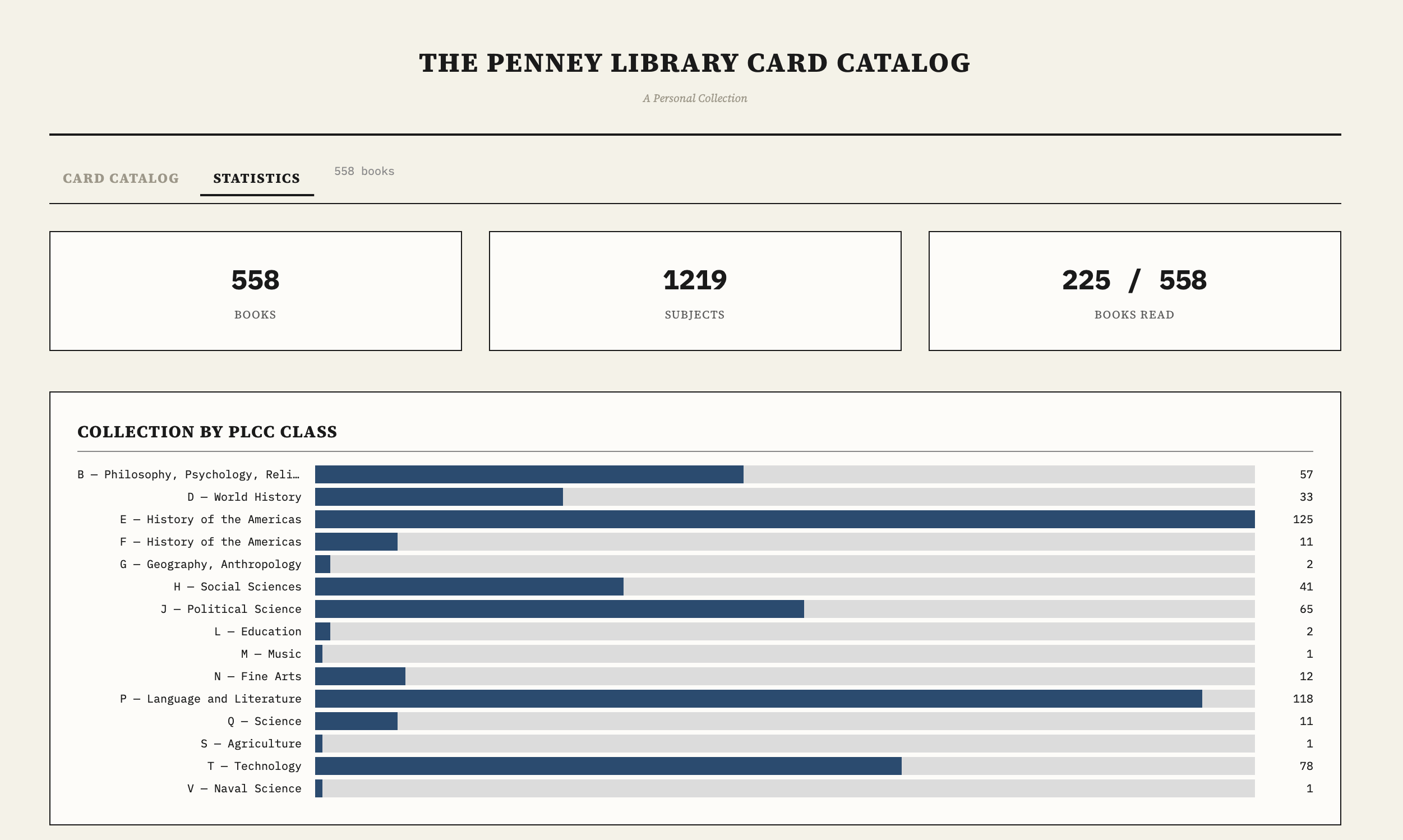
He’s chosen a deliberate vocabulary for it. There are tools named after famous Chicago opinion writers (Royko, after Mike Royko, for tweet-thread chunking); fictional librarians (Ultan, after the librarian in Gene Wolfe’s Book of the New Sun); and authors of stories about fictional librarians (Borges, for historical research). His after-action protocol is Ignatius, presumably for the Jesuit founder. His adversarial multi-agent review pipeline is called Inquisitor, which depending on your perspective codes either markedly less or markedly more Jesuit.
This stack is sort of like a cast of characters in a play, and sort of like an org chart of employees at a company. They’ve all got jobs to do.
Ignatius sits at the end of every project phase and interviews him about what worked and what didn’t. Then it writes a best-practices markdown the next project will read before doing anything else. Inquisitor runs an adversarial review pass against work product, surfaces errors with severity tags, applies the must-fixes, queues the rest for his judgment. ADRs — Architecture Design Records — version-control the evolving assumptions of every project, timestamped so the entire decision history is legible at a glance. When a Claude session inevitably approaches its context limit, the system writes its own handoff document with an ideal opening prompt for the next session.
Emmet pastes the prompt in. The new session reads the handoff. Work resumes. Previously, on Lost…
When he conducts research, the system pulls 200-page PDFs from naval archives and returns them as cross-referenced markdown files with confidence vectors on individual quotes — a number, attached to each piece of evidence, indicating how firmly the source supports the claim. It checks author bios for biases (“this person has this CV, and so we infer their biases to be...”) and flags adversarial voices missing from the literature — telling him, unprompted, you don’t have enough people pressing against the fundamental assumptions of this part of the project. All of this is catalogued in note cards, which are generated and sorted automatically.
When he builds a new tool, his own best practices require him to first read all of his existing tools and borrow architecture from them where it fits. The note-card cataloguing skill, for example, borrowed its interview architecture from the Ignatius after-action skill.
The system, in other words, is composing itself.
“Yeah, I’ve basically solved the memory across projects problem,” he told me, with the casual air of someone who has done something he understands is significant but hasn’t yet been instructed to act humble about.
But so, okay, let’s just take a look at all the stuff we walked through, one more time.
A quality-control pipeline. An adversarial review function. A document-citation system with confidence vectors. An author-bias scanner. A devil’s-advocate function that hunts for missing critique. A version-controlled architecture for tracking strategic decisions across the lifetime of a project. A library catalog. An archive. A retrospective process. A best-practices document that compounds across projects. An onboarding memory. A handoff protocol. A budget officer.
These are scripts, sure. But really they’re departments.
More specifically, they are the actual departments of an actual institution that produces actual research, of the kind that lives on the eighth floor of a building in a city you’ve heard of, with a director who flies to conferences and an annual budget your local school district would envy.
Emmet has, in other words, built in his spare time the operational equivalent of a small policy shop. No employees. No board. No budget. No bitter break-room coffee staining the floor of any building anywhere. You can imagine the whole thing fitting in a snowglobe on his desk. The organization’s one employee is also its CEO.
This is the part of the conversation where I started sweating a little bit and compulsively squeezing the armrests of my chair.
Emmet has built himself an apparatus. That apparatus can be described as a sort of latticed self that has evolved a working person into something like an institution.
He hasn’t gotten better at his job by working harder. He’s gotten better at his job by building something taller, grasping at the sky.
One standard objection to all of this is that AI flattens everything it touches into the same featureless register. Emmet’s work refutes this so completely it becomes its own argument.
He calls his system the Penney Design System, and it began with intuition. It’d be sick if I had my own style I could use for Google Slides. So he had the model study Sears Roebuck’s full design history, then Electricity World (a defunct trade journal from the early electric age), then the first ten years of RAND Corporation reports. Three completely distinct sources and traditions. Then he asked the model to compare them, and made decisions: 1910 Sears Roebuck for clarity, 1940s utility trade journal for layout, early RAND for voice of authority. Weighted the poles. Told the model to emphasize the trade-journal axis. Let the system construct a design language out of the result.
Now everything he ships looks like it came from somewhere. Somewhere specific. Somewhere chosen. Somewhere with values.
“People always say, like, ‘oh, taste is the final moat,’” Emmet tells me. “I think people just mean that, like, being cool is still important. But that’s not a meaningful thing to say. Maybe this is going to sound pretentious, but I think one of the things that’s important that AI can do for you, by being stylistically assertive, is to help cultivate yourself. Which is really the wellspring of taste.”
The model isn’t generating the taste. Emmet is. Then the apparatus executes the taste, consistently, across hundreds of artifacts he would never have had the time to produce by hand.
All of which is to say the bottleneck on creative work in 2026 isn’t the labor of execution. Nor is it some fundamentally, irreducibly human verve. It’s the willingness to do the work of figuring out what you actually want.
But so, I write professionally in roughly four registers depending on the audience, and produce probably three messaging artifacts per week for various projects, and I tweet entirely too often about all of it. I do not have a design system for any of that, and at no point until this conversation had I ever considered that I should.
Is that authenticity? Laziness? Or is it cope?
On the internet, a popular meme involves the process of carcinization — how nature and evolution wind up independently turning all kinds of different animals into crabs.
Emmet has caused me to realize a similar process is going on for work.
He was telling me about his friend Sterling, a graphic designer who has worked for A+ brands you’ve heard of — and has also, in the last year, become unreasonably good at vibe coding. The two of them had been comparing notes.
“The thing that we noticed,” Emmet said, “was that more and more of our lives were about making editorial decisions.”
What Emmet and Sterling were noticing — across two completely different professional domains — was the same shape converging on both of them. The work didn’t go away. It shifted. Execution became direction. Labor became judgment. The bottleneck on knowledge work moved up the stack, from can you make this? to can you decide what should be made?
Crab editors all. Red ink and claw marks.
Which explains why Emmet’s personal applications can also be so casual: he can whip them up as fast as he can do the task itself. He built his wife a meal-planning app that lets her drag recipes onto a calendar, scrapes ingredients, deduplicates, and emails her the shopping list. That took an afternoon. He built himself a Juggernaut Method workout app — a powerlifting program he’d never been willing to manually write down in a journal — that lives on his phone for his basement lifting session. That took him thirty minutes — barely enough time to scurry from the sand into the waves.
But where does this stop? Does it stop at all?
Most professional life, as currently practiced, runs on a quiet assumption: there’s a ceiling on how good you can get at your job in the middle of doing it. You can read a few books a year. You can attend conferences. You can develop, over a decade or two, the small set of practices that distinguish you from your peers. But the actual work is the work, and the work has its own gravitational pull, and the pull is hard enough that the question of whether you could be substantially more effective than you currently are doesn’t really come up. The ceiling is somewhere up there. You’ll get to it eventually, maybe. You’re doing fine.
This assumption is shattering.
What Emmet has demonstrated is that the ceiling has moved by an enormous distance, and the cost of climbing toward it has fallen, and the work of climbing is no longer fundamentally different from the work of having a hobby. The endless ladder is not totalizing. It is not even particularly hard. It is, in fact, very close to the cognitive register of reading nonfiction — rewarding, ongoing, accumulative, optional in any given week, fairly easy to integrate around the rest of your life.
And if it isn’t that costly, and if it’s actually kind of enjoyable, and if there’s a dimension of personal in addition to professional self-cultivation…isn’t it our duty to be doing this?
If you, like me, are working on something that you believe genuinely matters — whether the United States has enough electricity to power itself, whether a parent in a news desert knows what her school district is doing with its budget, whether a person facing eviction can navigate a courthouse in her own language, whether the policy idea you’ve been working on for three years can actually move — then the math has changed.
The cost of operating with much higher leverage has fallen substantially. Continuing to operate at the same level is a choice.
The people who depend on the work we do — the constituents, the readers, the parents, the patients, the citizens — are bearing the cost of that choice. That seems important to act on.
But also, I used to play poker semi-professionally. I wasn’t good enough to spike the tournament circuit, but what I could do was play eight or nine tables simultaneously online. And while that was a great way to help pay for college, it was a horrible way to live. Because you could always, always, always be making money. Lots of it. Every meal out, every pick-up ballgame, every trip to the gym or catch-up with a friend or party at the creole place downtown had a price of several hundred hypothetical dollars in expected value.
So the choices were to swim through a constant state of once-removedness from all life, or hemorrhage thousands of dollars in value to fully participate in literally anything.
Then again, the money was great, and I’d do it again in a heartbeat.
Which brings us back to the Gundam.
A Gundam is a fictional Japanese mecha — a bipedal armored combat platform piloted from inside the chest cavity, the centerpiece of a long-running anime franchise that has spanned forty years and several generations of weeb culture. It is, by design, a serious-looking thing dressed in maximally unserious circumstances.
Emmet’s project takes the construction of one — specifically, the Heavyarms variant, a 20-to-40-ton Gundam after Trowa Barton’s Heavyarms Custom — as a benchmark. The premise: what would the United States and its allies need to be able to do in order for the construction of a Heavyarms-class platform to be possible, and what does the gap between that capability and current capability tell us about the actual industrial base?
“It started as a joke,” Emmet told me. “I was like, what would it take to build a Gundam? Like, procurement-wise? I don’t know. But it’d be very funny to find out.”
What started as a joke kept turning up things that were not actually funny. The aforementioned 1983 National Academy report on the collapse of American machine tooling. The German robotics firm whose acquisition by a Chinese company forced a six-month pause in F-35 production while the Pentagon vetted a single robotic arm.
Forget building a mecha. We’re having trouble building anything.
How do we know? Emmet’s current MVP renders a tech tree across seven research tracks: propulsion, structural materials, mobility and balance, sensing and autonomy, armament integration, industrial base, doctrinal utility. Twenty-one gating research nodes. Six are researched at source-card depth. Thirteen are not yet started. The source-cards, where they exist, are exhaustive.
Taking the joke seriously generated exactly the kind of structured industrial-base inquiry that ordinarily costs a defense consultancy six figures and twelve months.
“It became a serious project,” Emmet said, “because I was like, oh, I’m starting to realize what’s going on with American munitions, and the defense industrial base. This could be a really interesting way to bring people into this problem.”
I asked him how close we are to building a Gundam.
“I would assume far. But the reason you set Gundam Level Zero is because it would stress test every single aspect of what we try to do. And it would also be very beneficial for, like, every other thing we want to build.”
As far as sci-fi inspirations go, Gundams have fallen out of fashion. Much more readily-available when it comes to product comparisons are things like Neal Stephenson’s “Young Lady’s Illustrated Primer” from The Diamond Age, or how Samantha from Her led to an awkward public kerfluffle between ScarJo and OpenAI.
But fundamentally what we’re doing is sitting here talking seriously and casually about building Gundams like that’s a totally normal conversation to be having, and — far from being an indulgent waste of time amongst hyperactive nerds — it’s surfacing real material constraints on our capacity as a nation and a nation’s military to build anything.
It’s only going to get weirder from here. But more than that, if we’re not getting weird, we’re probably not flying high enough.
The first time I saw one of Emmet’s dashboards, I thought: cool. The second time I thought: how? The third time I thought: oh.
Should I be working at his level? I think so, maybe. Will I? Possibly. Should you? I don’t know. That depends on what you’re working on, and what the people who depend on you have a right to expect, and how honest you are willing to be with yourself about whether the gap between what you are producing and what you could be producing is one you can keep tolerating.
Assuming that’s the right paradigm at all.
I am generally averse to maximizer culture. This tends to be for the straightforward reason that what’s most legible is typically not what’s most valuable, and a great deal of maximization simply involves solving for what’s easiest to see. Poker taught me what a life lived at constant expected-value optimization actually feels like, and it isn’t a life. But there’s also no romantic repose in willfully being worse at a job grounded in a moral imperative to improve the world. The question is whether the waxwings we build for ourselves are up to the task of soaring through the air.
The point of the metaphor, after all, isn’t that it’s dangerous to fly. It’s that, after a certain point, the sun can get too hot.
The wings Emmet has built are not a set of obligations to do more, in the maximizer sense, until you get burned. His apparatus is constructed out of a set of capabilities for spending less of his life on work that matters less, so that the work that matters more — the work that calls him to do it in the first place — can get the leverage it deserves.
That’s true of work that matters to him, and that’s true of work that matters to each of us. There shall be cathedrals. Ubiquitous AI infrastructure has arrived, and it’s here to stay. The ceiling is much higher than we think. The horizon is much weirder.
But at the root of all of it is that simple question of what matters — a question that, previously, has been easy to brush under the rug.
So tell me. What matters to you?
Does it really?